
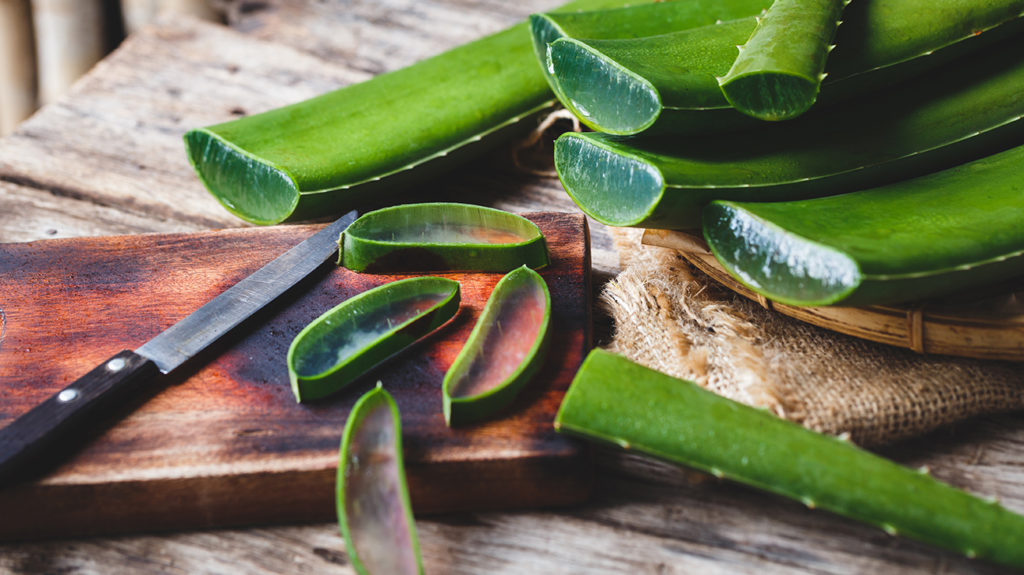
It is found in many consumer products including beverages, skin lotion, cosmetics, or ointments for minor burns and sunburns. There is little clinical evidence for the effectiveness or safety of Aloe vera extract as a cosmetic or medicine.
Usually, two substances from Aloe vera – a clear gel and its yellow latex – are used to manufacture commercial products. Aloe gel typically is used to make topical medications for skin conditions, such as burns, wounds, frostbite, rashes, psoriasis, cold sores, or dry skin.
Benefits of aloe vera
Aloe vera is scientifically proven to have a plethora of properties and beneficial uses for the skin, helping with many skin dissorders and acting as a moisturising agent.
Among others, here are some of its uses:
Moisturizes
Aloe vera extract is an effective substance from enhancing skin hydration and reducing dryness. It is non-greasy and is ideal for individuals with oily, combination or sensitive skin.
Fight the Signs of Aging
With aging comes the appearance of fine lines and wrinkles, as well as the loss of skin elasticity. Antioxidants present aloe vera, like beta carotene, vitamin C and E, can aid in improving skin firmness and keep the skin hydrated. Vitamin C decreases cell damage and plays a vital role in the body’s natural collagen synthesis to fend off the signs of aging, like wrinkles. Vitamin A minimizes the damage caused by ultraviolet (UV) rays and keeps the skin conditioned, which keeps dark spots and wrinkles at bay, and prevents dryness.
Speed Up Wound Healing
Cuts, burns and other wounds can be tackled with aloe vera by accelerating skin cell reproduction and the overall healing process. Aloe vera contains auxins and gibberellins (plant hormones) that help with wound healing and providing anti-inflammatory benefits.
Treat Acne
Aloe vera can reduce skin inflammation, blistering and spots related to acne, a skin condition in which the pores clog with dead skin cells, oil and/or bacteria. The anti-inflammatory and anti-bacterial properties of aloe vera make it effective in treating acne, by reducing the redness, fighting against acne-producing bacteria and accelerating the healing of blemishes and scars caused by acne.
Burns
For minor burns, apply aloe vera gel to the affected area up to three times daily. You may also need to protect the area with gauze.
Sunburn
While aloe vera helps soothe sunburn, researchTrusted Source shows that it’s not an effective way to prevent sunburn, so make sure you wear sun protection every day!
Small abrasions
If you’ve scuffed up your chin or forehead, you can apply aloe vera to the area for quick relief from pain and burning sensations. Use three times per day.
Cuts
If you’re used to grabbing Neosporin for a minor cut, consider trying aloe vera instead. Its molecular structure helps heal wounds quickly and minimizes scarring by boosting collagen and fighting bacteria. Apply up to three times per day.
Dry skin
Aloe vera gel absorbs easily, making it ideal for oily skin. However, it can help treat dry skin, too. Consider swapping out your regular moisturizer for aloe after bathing to help seal moisture into your skin.
Frostbite
Frostbite is a serious condition that requires emergency medical treatment. While aloe vera gel has been used historically as a frostbite remedy, ask your doctor first before trying it.
Cold sores
Unlike canker sores, cold sores develop on the outside of your mouth. Aloe vera may help treat the herpes virus, which is also the underlying cause of cold sores. Apply a small amount of the gel to your cold sore twice daily until it goes away.
Eczema
The moisturizing effects of aloe can help alleviate dry, itchy skin associated with eczema. Aloe vera gel may also help alleviate seborrheic dermatitis. While this oily form of eczema is most often found in the scalp, it can also affect parts of your face and behind the ears, too.
Psoriasis
As with eczema, aloe vera may help alleviate inflammation and itchiness from psoriasis. For best results, apply aloe vera gel twice daily to the affected area of skin.
Inflammatory acne
Due to the anti-inflammatory effects of aloe vera, the gel may help treat inflammatory forms of acne, such as pustules and nodules. Apply the gel with a cotton swab directly to the pimple three times daily.
Sources: healthline.com
ijpsr.com
ncbi.nlm.nih.gov
wikipedia.org