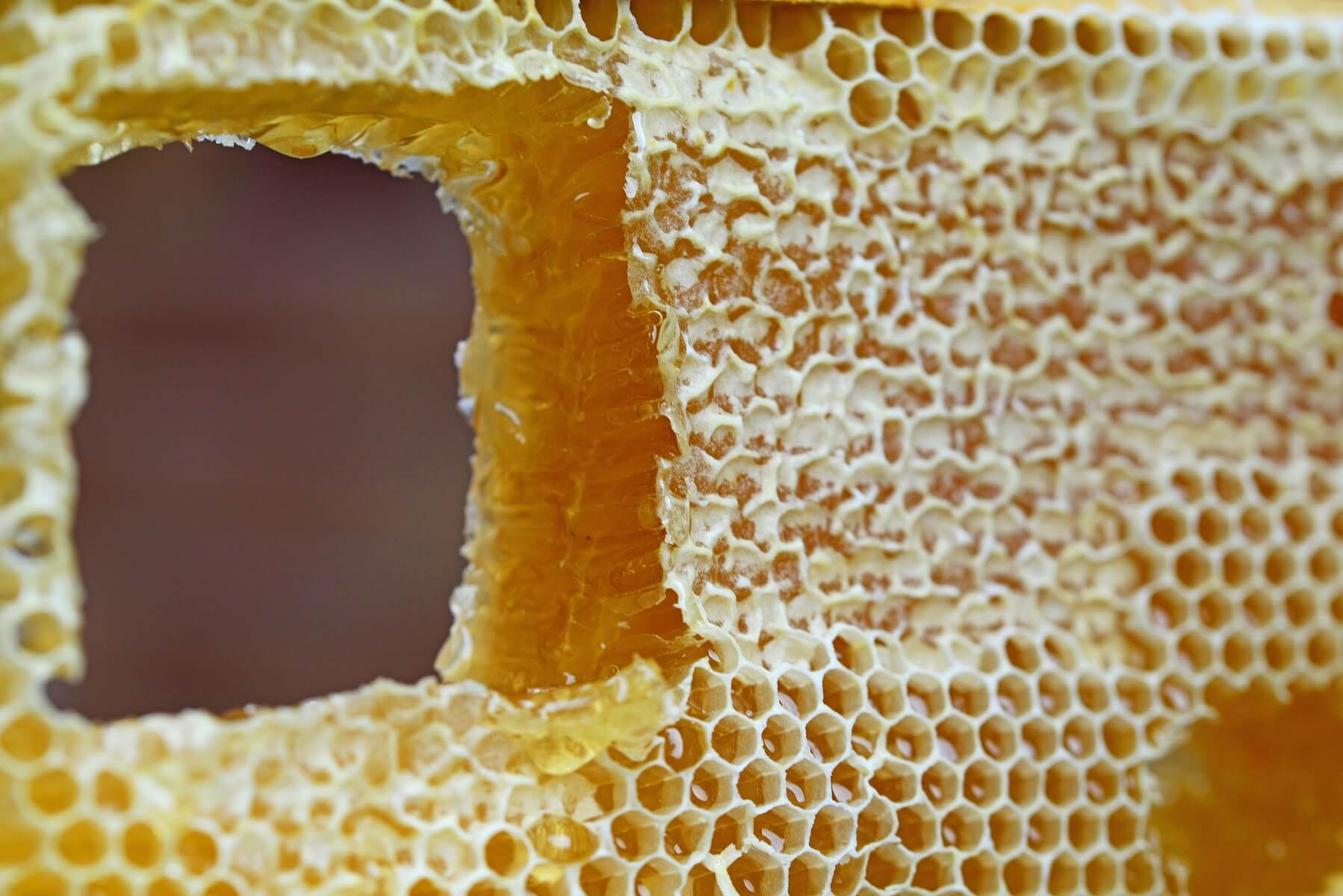
Beeswax (cera alba) is a natural wax produced by honey bees of the genus Apis. The wax is formed into scales by eight wax-producing glands in the abdominal segments of worker bees, which discard it in or at the hive. The hive workers collect and use it to form cells for honey storage and larval and pupal protection within the beehive. Chemically, beeswax consists mainly of esters of fatty acids and various long-chain alcohols.
Beeswax has been used since prehistory as the first plastic, as a lubricant and waterproofing agent, in lost wax casting of metals and glass, as a polish for wood and leather and for making candles, as an ingredient in cosmetics and as an artistic medium in encaustic painting.
Benefits of Beeswax
Beeswax is an excellent addition to cosmetic products, for many reasons.
When used in lotions and creams, beeswax creates a barrier which helps to seal moisture into the skin. This is especially beneficial in lip chap during the dry winter months.
This barrier also helps to protect the skin from environmental toxins and irritants.
Unlike petroleum jelly, which is used in a large variety of beauty products, beeswax will not “suffocate” the skin, but rather allow it to breathe while still providing a protective barrier.
Beeswax helps to thicken homemade cosmetics and lotions because it is solid at room temperature and has a relatively high melting point of 147 degrees Fahrenheit. This is especially helpful in recipes that include high amounts of coconut oil, which has a low melting point, or other oils that are liquid at room temperature.
Beeswax also has vitamin A, which improves hydration to the skin and promotes cell regeneration.
Protectant
Acting as a surfactant, beeswax, when blended into cold creams and other skin lotions, forms a protective barrier on the surface of the skin. This barrier, according to Koster Keunan, a global organic wax supplier, provides a film of protection against irritants while still allowing the skin to breathe.
Skin Healer
In its natural state, beeswax is firm but pliable. Melted and combined with other ingredients, beeswax adds body to skin care products, making creams thicker. Like other beehive products, including honey and royal jelly, beeswax offers anti-inflammatory, antibacterial and antiviral benefits, according to the magazine, Delicious Living, making it potentially beneficial for treating minor skin irritations.
Skin Softener
Dry, rough skin may benefit from creams, lotions or soaps that contain beeswax. When added to skin care products, beeswax acts as an emollient and a humectant, drawing moisture to the skin and sealing it in, reports Botanical.com. Beeswax also contains vitamin A, which may be beneficial in softening and rehydrating dry skin and in cell reconstruction.
Antibacterial
Researchers combined honey, olive oil and beeswax, then applied the mixture to laboratory plates on which the bacteria, Staphylococcus aureus, and the fungus, Candida albicans were growing. The honey/beeswax mixture inhibited the growth of the bacteria and fungus, making beeswax, along with honey, potentially beneficial in the treatment of diaper rash and other bacterial skin conditions.